
EducationARCHITECT
EducationARCHITECT
Volume 24 Number 2
ADDRESSING THE DESIGN NEEDS OF TODAY'S INDEPENDENT SCHOOLS
They dined on mince, and slices
of quince, which they ate with a
Runcible Spoon
They dined on mince, and slices of quince, which they ate with a Runcible Spoon
The Owl and the Pussycat by Edward Lear (1871)
The Owl and the Pussycat by Edward Lear (1871)
Dining is way too complicated. A single place setting consists of an array of plates, glasses, and utensils – the use of each dictated by arcane rules of etiquette. Many a time I have reached for the wrong water glass or unintentionally consumed my neighbor’s dinner roll. And utensil placement can be so confusing. An all purpose implement like Edward Lear’s “runcible spoon” would greatly simplify the experience.
Did I mention that food preparation requires an excessive number of pots and pans?
I have taken up the quest to tilt at the windmill known as smallwares. This is not the ranting of a crazed individual. I have been led to the brink by a specific circumstance. The opening of a dining hall project of my design was delayed for wont of implements for food preparation and consumption. The dish did not run away with the spoon. I am sorry to say that they never arrived. The line item was…gulp…missing from the list of necessary equipment purchases. As I said, dining is too complicated.
Oftentimes construction costs are misunderstood to be the total amount necessary to begin operation in a new facility. How many times have we heard a dollar per square-foot quote from a General Contractor and assumed that is the pris fixe? Soup to nuts, so to speak.
Unfortunately, the General Contractor cost represents only a portion of the total project. Consideration must be allotted to furnishing and equipping the completed building. These "line items," as they are known, are seldom found under the category of bricks and mortar. And they are not the only ones. The menu is a la carte.
As a rule, the total project expense is the sum of two categories, referred to as Hard and Soft Costs. Generally the edifice falls under the former and contents under the later. As in many aspects of life, the line of demarcation is not always distinct.
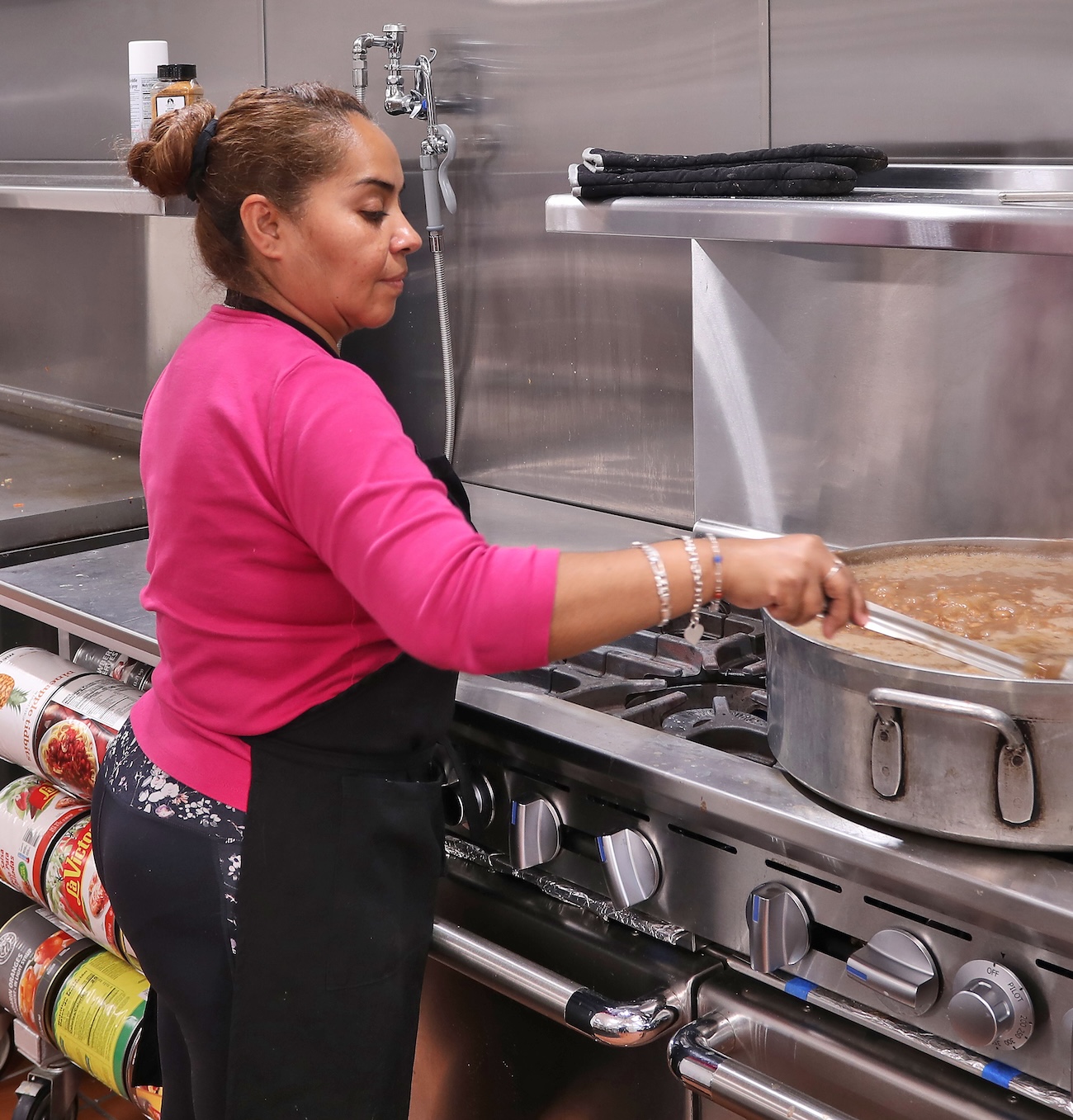
View of cook line at new Kitchen and Dining Facility for Notre Dame High School in Sherman Oaks, CA.
Design by Pica + Sullivan Architects.
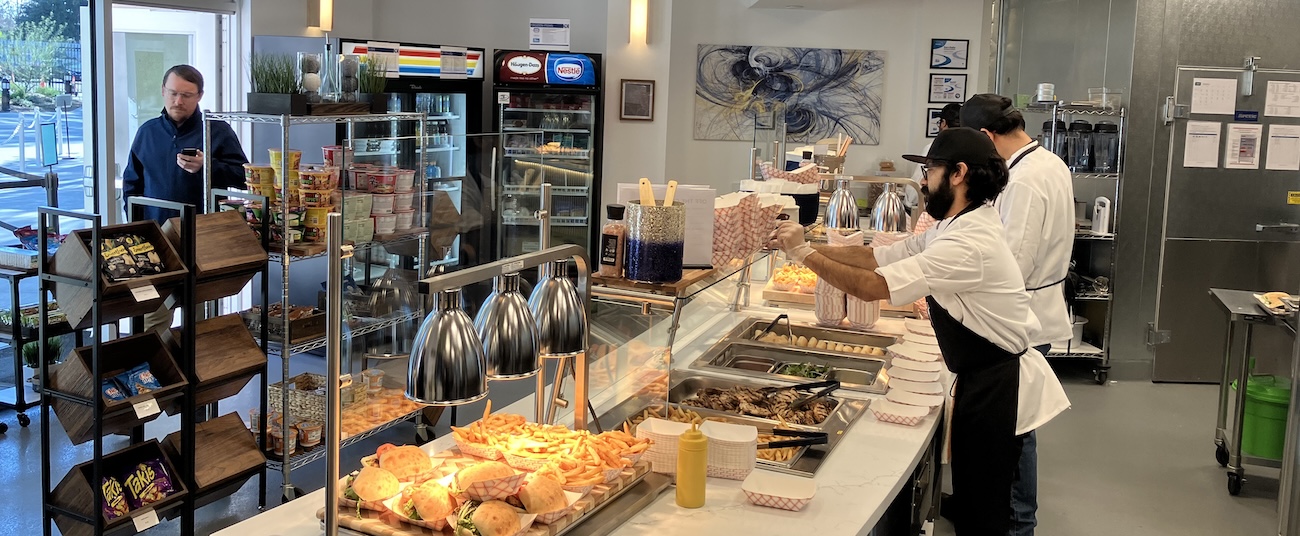
Serving line at new Kitchen at Flintridge Prep in La Canada -Flintridge, CA. Design by Pica + Sullivan Architects.
Although each project is unique, there are general guidelines that can help determine where certain costs belong. The General Contractor is responsible for moving the dirt, constructing the foundation, erecting and cladding the frame, completing the interior finishes, plumbing, electrifying, heating and ventilating, and providing a fully weather tight enclosure ready to inhabit. But the Owner must provide the necessary appurtenances and embellishments that transform the simple hamburger into a Happy Meal®.
Soft Costs are divided into subcategories. These include the expense of obtaining preliminary site information (surveys, soils reports and environmental assessments), the development of plans (architecture and engineering), and the creation of necessary fundraising materials (models and renderings).
Additional Soft Costs include agency review and permitting, construction period expenses (third party testing and inspection, construction surveying and staking), equipment and furniture purchases and installation (don’t forget the smallwares), communication devices (phone, data, security), post construction materials (donor plaques, building signage) and move-in costs.
A reserve fund should also be considered, to handle the inevitable miscues or potential construction
delays.
As can be imagined, the bottom line is significantly higher than the cost of delivering a habitable shell. A 25 percent up-charge for Soft Costs is not unusual in a typical project.
Specialized facilities with large technology purchases require higher percentages. Being proactive in identifying and budgeting the line items at the start of the process helps avert being blindsided - by a pot or a pan, for example.
Planning a formal dinner starts with a careful review of the recipes and a listing of ingredients that need to be procured. The same is true for construction projects, with plans and line items supplanting the roles of recipes and ingredients. Identifying Soft Costs is similar to creating a simple shopping list for a multicourse meal. Unfortunately (and inconveniently) the items are not found at the local grocery store.
Discovering the cost of each item requires careful research. And remember to include a small contingency. It would cover the purchase of a few runcible spoons - in the event of that emergency.
Although each project is unique, there are general guidelines that can help determine where certain costs belong. The General Contractor is responsible for moving the dirt, constructing the foundation, erecting and cladding the frame, completing the interior finishes, plumbing, electrifying, heating and ventilating, and providing a fully weather tight enclosure ready to inhabit. But the Owner must provide the necessary appurtenances and embellishments that transform the simple hamburger into a Happy Meal®.
Soft Costs are divided into subcategories. These include the expense of obtaining preliminary site information (surveys, soils reports and environmental assessments), the development of plans (architecture and engineering), and the creation of necessary fundraising materials (models and renderings).
Additional Soft Costs include agency review and permitting, construction period expenses (third party testing and inspection, construction surveying and staking), equipment and furniture purchases and installation (don’t forget the smallwares), communication devices (phone, data, security), post construction materials (donor plaques, building signage) and move-in costs.
A reserve fund should also be considered, to handle the inevitable miscues or potential construction
delays.
As can be imagined, the bottom line is significantly higher than the cost of delivering a habitable shell. A 25 percent up-charge for Soft Costs is not unusual in a typical project.
Specialized facilities with large technology purchases require higher percentages. Being proactive in identifying and budgeting the line items at the start of the process helps avert being blindsided - by a pot or a pan, for example.
Planning a formal dinner starts with a careful review of the recipes and a listing of ingredients that need to be procured. The same is true for construction projects, with plans and line items supplanting the roles of recipes and ingredients. Identifying Soft Costs is similar to creating a simple shopping list for a multicourse meal. Unfortunately (and inconveniently) the items are not found at the local grocery store.
Discovering the cost of each item requires careful research. And remember to include a small contingency. It would cover the purchase of a few runcible spoons - in the event of that emergency.
Pica + Sullivan Architects, Ltd.
Specialize in architectural design and planning for non-profit independent institutions, religious-based organizations, nonprofit social service organizations and charitable foundations. We have been involved in the design of well over 1,000 projects since the start of our firm in 1990. These range in size from master planning of entire campuses to architectural design for remodels, additions, and new buildings. We have found that the practice of architecture is a collective endeavor - particularly when the client has multiple constituencies with a myriad of priorities and goals. A design that serves a client appropriately is the result of collaboration to establish and refine the program and image to fit the needs and budget. In order to deliver the services of architecture and planning to our clients, Pica + Sullivan has an approach that includes hands-on principals, a flexible and responsive staff, a value-engineering sensibility, a belief in contextual architecture and a deep understanding of the non-profit client. If you are contemplating expansions to your existing facilities, we would appreciate having an opportunity to meet and discuss how Pica + Sullivan Architects can provide assistance.