
EducationARCHITECT
EducationARCHITECT
Volume 26 Number 1
ADDRESSING THE DESIGN NEEDS OF TODAY’S INDEPENDENT SCHOOLS
CURTIS SCHOOL
CURTIS SCHOOL
CLIC Ribbon-Cutting
CLIC Ribbon-Cutting
An early morning ribbon-cutting ceremony marked the opening of the new Curtis School Collaborative Learning and Innovation Center (or CLIC). Thanks to the vision and commitment of the Board of Trustees and Administration, the future really is now!
Under the leadership of Dr. Meera Ratnesar, Curtis School embarked on a multiphase initiative to amplify the school's legacy of thinking forward about elementary education. As noted by Dr. Ratnesar, "It is not enough to teach for the now, we have to teach for the future. We know that collaborative learning not only develops higher level thinking skills in students, but boosts their confidence and self-esteem as well. There is no environment in which collaboration is not essential in the 21st Century."
Located in the Santa Monica Mountains between L.A.'s Westside and the San Fernando Valley, Curtis is an independent, coeducational day school. It serves elementary-age students from Developmental Kindergarten (DK) through the Sixth Grade.
The new 21,000 square-ft, building is situated along the existing campus quad. The two-story (plus lower level) CLIC incorporates state-of-the-art Science, Technology, Engineering, Art and Math (STEAM) resources for all grade levels.
Designed by noted Los Angeles-based education architect Pica + Sullivan Architects, the CLIC is intentionally planned to encourage cross-curricular opportunities. Engineering team members for the project included Johnson-Leifield Structural Engineer, KPFF Inc, Civil Engineers, Carter Romanek Landscape Architects, and AlfaTech Mechanical and Electrical Engineers. Matt Construction was the General Contractor.
An early morning ribbon-cutting ceremony marked the opening of the new Curtis School Collaborative Learning and Innovation Center (or CLIC). Thanks to the vision and commitment of the Board of Trustees and Administration, the future really is now!
Under the leadership of Dr. Meera Ratnesar, Curtis School embarked on a multiphase initiative to amplify the school's legacy of thinking forward about elementary education. As noted by Dr. Ratnesar, "It is not enough to teach for the now, we have to teach for the future. We know that collaborative learning not only develops higher level thinking skills in students, but boosts their confidence and self-esteem as well. There is no environment in which collaboration is not essential in the 21st Century."
Located in the Santa Monica Mountains between L.A.'s Westside and the San Fernando Valley, Curtis is an independent, coeducational day school. It serves elementary-age students from Developmental Kindergarten (DK) through the Sixth Grade.
The new 21,000 square-ft, building is situated along the existing campus quad. The two-story (plus lower level) CLIC incorporates state-of-the-art Science, Technology, Engineering, Art and Math (STEAM) resources for all grade levels.
Designed by noted Los Angeles-based education architect Pica + Sullivan Architects, the CLIC is intentionally planned to encourage cross-curricular opportunities. Engineering team members for the project included Johnson-Leifield Structural Engineer, KPFF Inc, Civil Engineers, Carter Romanek Landscape Architects, and AlfaTech Mechanical and Electrical Engineers. Matt Construction was the General Contractor.
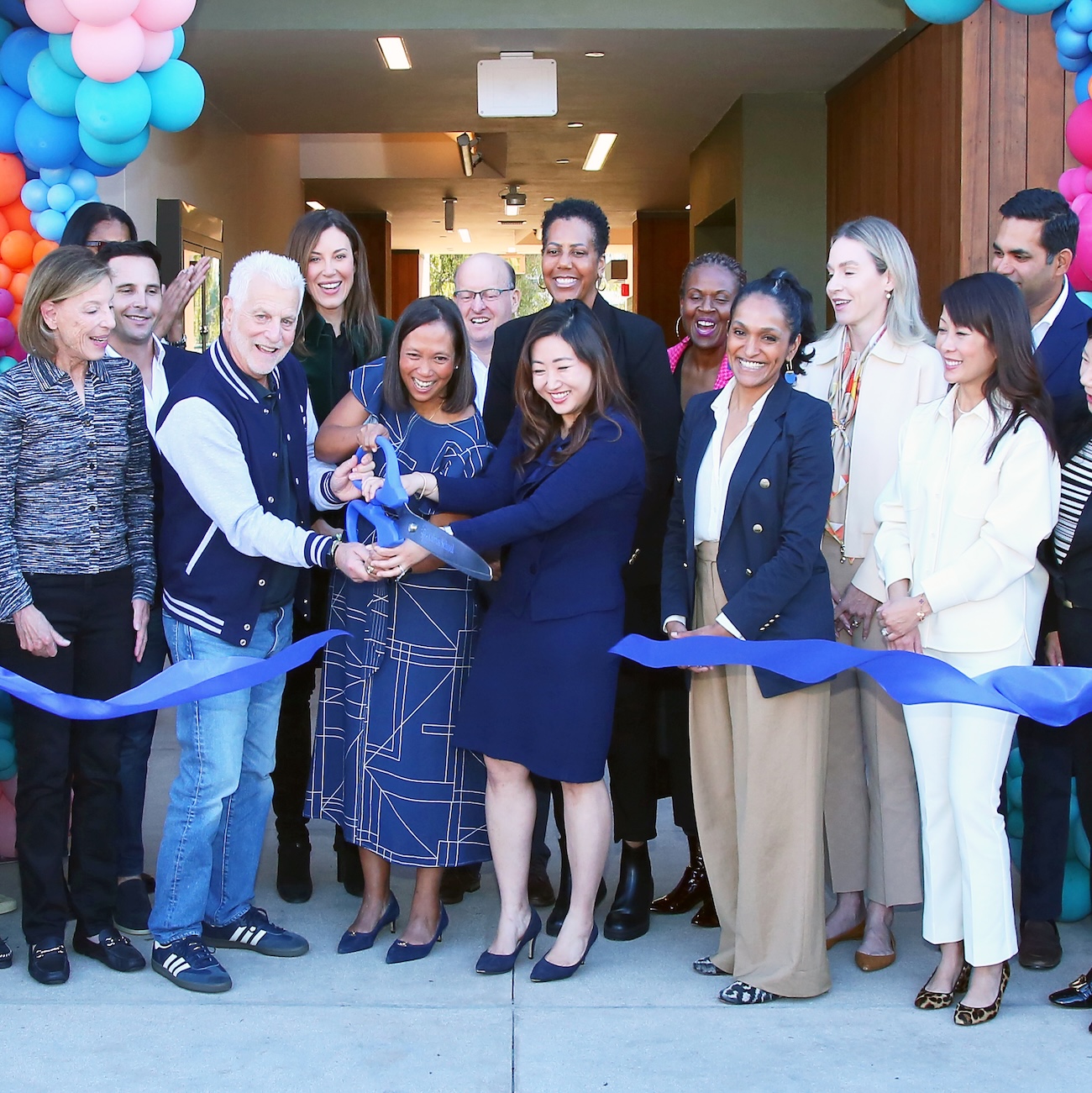
Curtis School Collaborative Learning and Innovation Center opening ceremony. Building designed by Pica + Sullivan Architects.
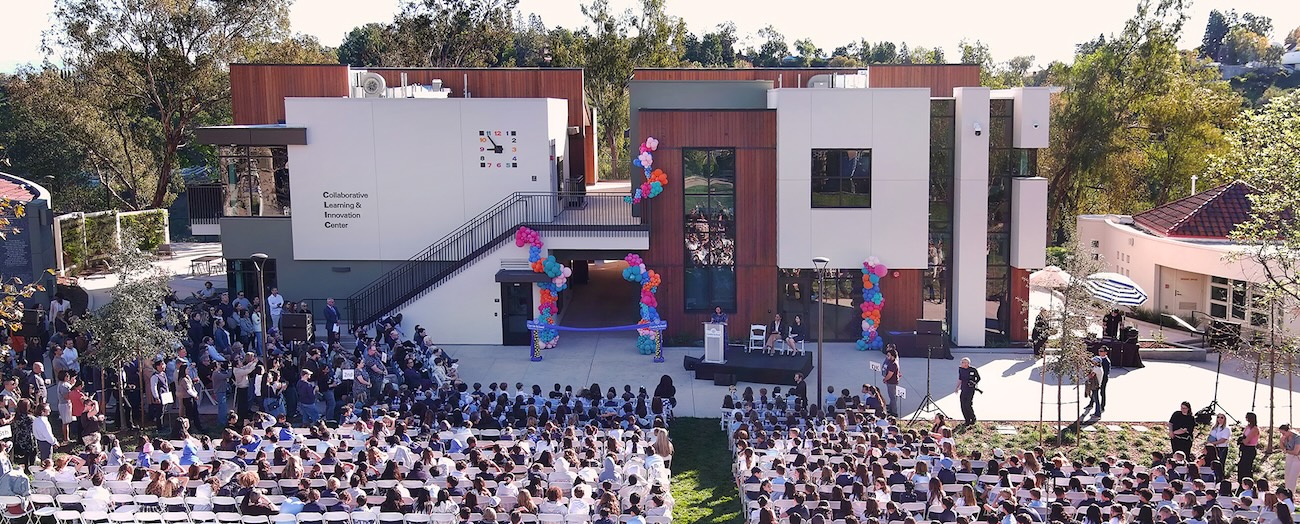
Curtis School Collaborative Learning and Innovation Center designed by Pica + Sullivan Architects.
The Pica + Sullivan design separates the building into two vertical groupings, with each level housing two sets of classrooms. The approach of dividing the physical mass, along with incorporating variable roof heights and contrasting exterior materials, reduces the apparent scale - allowing the new structure to harmonize with the existing campus context.
Pairing of programs (in adjacent classrooms) enables cross-curricular project based learning - encouraging students to explore differing perspectives in an integrate fashion. As noted by Science Teacher Justin Mclnnes, "There will be an ability to seamlessly flow back and forth between rooms and disciplines."
The Pica + Sullivan design separates the building into two vertical groupings, with each level housing two sets of classrooms. The approach of dividing the physical mass, along with incorporating variable roof heights and contrasting exterior materials, reduces the apparent scale - allowing the new structure to harmonize with the existing campus context.
Pairing of programs (in adjacent classrooms) enables cross-curricular project based learning - encouraging students to explore differing perspectives in an integrate fashion. As noted by Science Teacher Justin Mclnnes, "There will be an ability to seamlessly flow back and forth between rooms and disciplines."
The Pica + Sullivan design separates the building into two vertical groupings, with each level housing two sets of classrooms. The approach of dividing the physical mass, along with incorporating variable roof heights and contrasting exterior materials, reduces the apparent scale - allowing the new structure to harmonize with the existing campus context.
Pairing of programs (in adjacent classrooms) enables cross-curricular project based learning - encouraging students to explore differing perspectives in an integrate fashion. As noted by Science Teacher Justin Mclnnes, "There will be an ability to seamlessly flow back and forth between rooms and disciplines."
On the first floor of the CLIC building the Lower Elementary Science teaching space is paired with the Lower Elementary Art teaching space. Robotics and Maker Space/Engineering are a cohort on the opposite side of the breezeway. The Upper Elementary Science teaching space is paired with the Upper Elementary Art teaching space on the second floor. Across the breezeway, the 6th Grade Science classroom and the 3-D Art/Ceramics studio stand alone.
CLIC Co-Designed With Curtis School Teachers
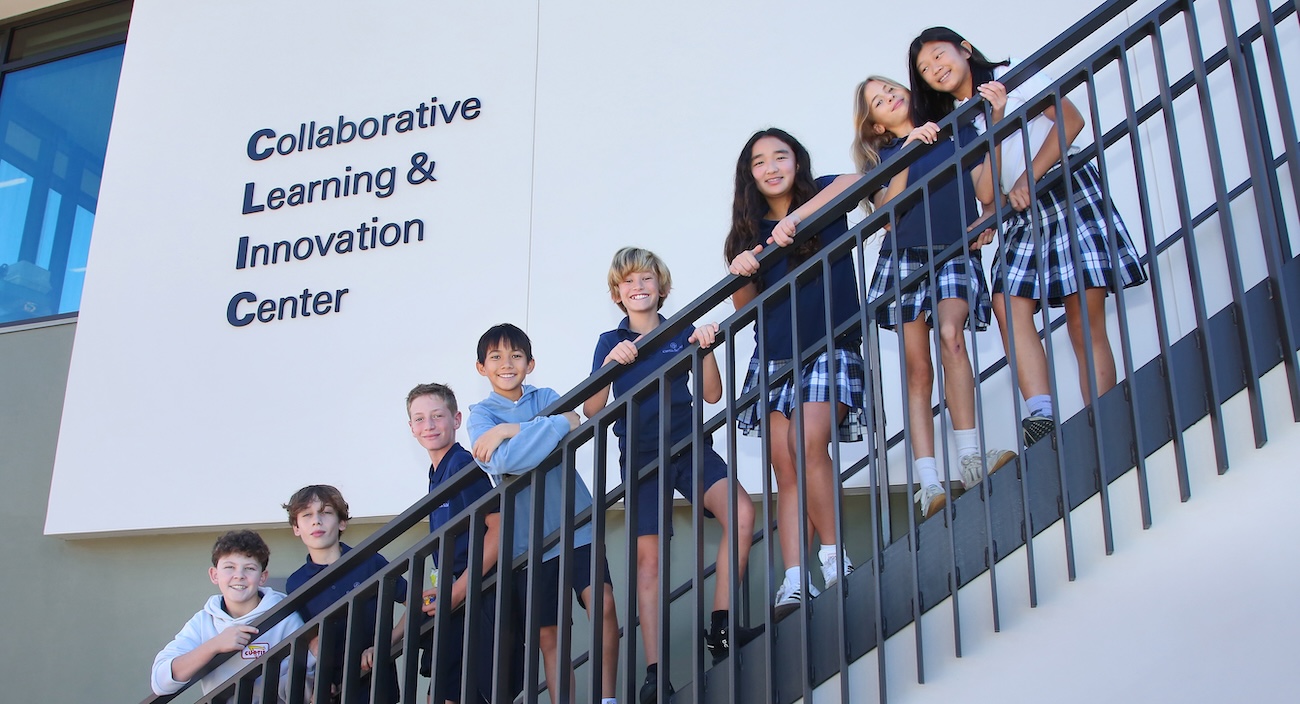
Curtis School Collaborative Learning and Innovation Center designed by Pica + Sullivan Architects.
On the first floor of the CLIC building the Lower Elementary Science teaching space is paired with the Lower Elementary Art teaching space. Robotics and Maker Space/Engineering are a cohort on the opposite side of the breezeway. The Upper Elementary Science teaching space is paired with the Upper Elementary Art teaching space on the second floor. Across the breezeway, the 6th Grade Science classroom and the 3-D Art/Ceramics studio stand alone.
The temperate Southern California climate allows for extending the learning environment to the exterior. The first floor classrooms open to adjacent courts - encouraging alternative teaching venues and the unique opportunity for presenting curriculum in a meaningful and memorable fashion.
As noted by Dr. Ratnesar, "When we take down the walls between classrooms, subjects, grade levels, and the outside - in this case literally – students develop into curious and dexterous problem solvers."
The Collaborative Learning Innovation Center includes a 7,000 SF lower level - housing teacher collaboration space, Internet Technology (IT) Help Desk Center, a multi-purpose classroom, a skylit Movement Room, and a large "Materials Bank" storage (essential to support a project-based learning curriculum).
As noted by Dr. Ratnesar, "At Curtis School we share an overriding purpose to build our children's foundation and set them up to be the empathetic collaborators that our world needs. Our teachers are so excited to get into CLIC, start teaching and expanding our program."
The temperate Southern California climate allows for extending the learning environment to the exterior. The first floor classrooms open to adjacent courts - encouraging alternative teaching venues and the unique opportunity for presenting curriculum in a meaningful and memorable fashion.
As noted by Dr. Ratnesar, "When we take down the walls between classrooms, subjects, grade levels, and the outside - in this case literally – students develop into curious and dexterous problem solvers."
The Collaborative Learning Innovation Center includes a 7,000 SF lower level - housing teacher collaboration space, Internet Technology (IT) Help Desk Center, a multi-purpose classroom, a skylit Movement Room, and a large "Materials Bank" storage (essential to support a project-based learning curriculum).
As noted by Dr. Ratnesar, "At Curtis School we share an overriding purpose to build our children's foundation and set them up to be the empathetic collaborators that our world needs. Our teachers are so excited to get into CLIC, start teaching and expanding our program."
Pica + Sullivan Architects, Ltd.
Specialize in master planning, architectural design, interior design and project management for non-profit schools, religious institutions, social service organizations and charitable organizations. Our approach includes hands-on principals who are involved in the project from inception through completion; flexible and responsive staff who have a long history with the firm; a value-engineering approach to design where the cost-benefit is considered through-out; contextual approach to design where an architecture unique to the context is developed for each client; understanding of the non-profit client as a multi-faceted group of constituents; and most importantly multiple projects with most clients which demonstrates the level of confidence and trust that is placed in our firm.