
EducationARCHITECT
EducationARCHITECT
Volume 26 Number 12
ADDRESSING THE DESIGN NEEDS OF TODAY'S INDEPENDENT SCHOOLS
Fibonacci Sequence?
Fibonacci Sequence?
Silicon Atom? Living Wall?
Silicon Atom? Living Wall?
Under the leadership of Dr. Meera Ratnesar, Curtis School embarked on a multiphase initiative to strengthen the school’s longstanding commitment to forward-thinking elementary education.
Located in the Santa Monica Mountains between the L.A. Westside and the San Fernando Valley, Curtis is an independent coeducational day school serving students from Developmental Kindergarten through the Sixth Grade.
In Fall 2025, Curtis School celebrated the opening of its new 21,000-square-foot Collaborative Learning and Innovation Center (CLIC), a facility designed to support the school’s expanding emphasis on interdisciplinary learning. The two-story building, with an additional lower level, houses state-of-the-art resources for science, technology, engineering, art, and mathematics (STEAM) across all grade levels.
Designed by Los Angeles–based Pica + Sullivan Architects, the building reflects a deliberate effort to create environments that encourage collaboration and cross-curricular exploration.
Rather than presenting a single monolithic structure, the design divides the building into two vertical groupings, each level housing paired classrooms. This strategy, combined with varied roof heights and a palette of contrasting exterior materials, reduces the building’s apparent scale and allows it to harmonize with the existing campus.
Under the leadership of Dr. Meera Ratnesar, Curtis School embarked on a multiphase initiative to strengthen the school’s longstanding commitment to forward-thinking elementary education.
Located in the Santa Monica Mountains between the L.A. Westside and the San Fernando Valley, Curtis is an independent coeducational day school serving students from Developmental Kindergarten through the Sixth Grade.
In Fall 2025, Curtis School celebrated the opening of its new 21,000-square-foot Collaborative Learning and Innovation Center (CLIC), a facility designed to support the school’s expanding emphasis on interdisciplinary learning. The two-story building, with an additional lower level, houses state-of-the-art resources for science, technology, engineering, art, and mathematics (STEAM) across all grade levels.
Designed by Los Angeles–based Pica + Sullivan Architects, the building reflects a deliberate effort to create environments that encourage collaboration and cross-curricular exploration.
Rather than presenting a single monolithic structure, the design divides the building into two vertical groupings, each level housing paired classrooms. This strategy, combined with varied roof heights and a palette of contrasting exterior materials, reduces the building’s apparent scale and allows it to harmonize with the existing campus.
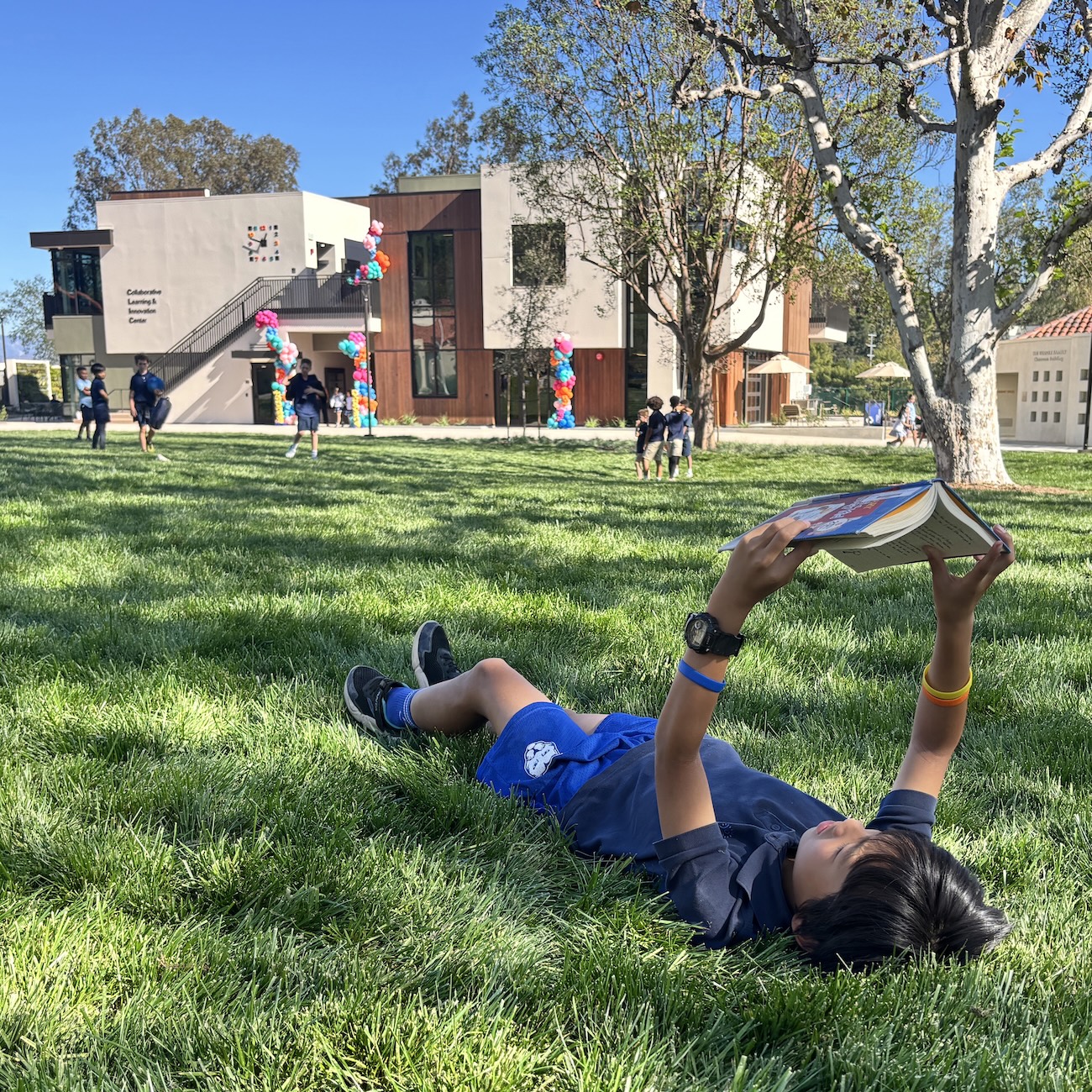
View of Curtis School CLIC from campus quad. Architectural Design and Planning by Pica + Sullivan Architects. Landscape and Hardscape Design by Carter, Romanek Land-scape Architects.
At the heart of the concept is the pairing of complementary programs within adjacent classrooms. Science and Art, as well as Maker Space-Engineering and Robotics, are intentionally located side by side, allowing students and teachers to move fluidly between disciplines. This proximity supports project-based learning and encourages students to approach problems from multiple perspectives, as ideas evolve from concept to experimentation and creative expression.
The Innovation Center extends this interdisciplinary philosophy beyond the building envelope through a series of outdoor learning environments designed by Agoura Hills–based Carter, Romanek Landscape Architects. These spaces function as open-air classrooms that reinforce the connection between the STEAM disciplines while providing opportunities for hands-on exploration.
On the north side of the building, the Collaboration Court serves both the Science Lab and the Art Studio. The patio design draws inspiration from the Fibonacci Sequence – the mathematical progression that produces the “Golden Spiral” found throughout nature. This concept is expressed in the paving pattern, where the spiral motif subtly guides movement and gathering within the space.
Framing the north edge of the court is a green vertical landscape wall that provides a backdrop to the Fibonacci-themed patio. This Living Wall, donated by the Rob & Shari Friedman Family, is composed of modular planting trays and planted with durable succulents and similar species whose natural growth patterns echo the Golden Spiral. The living mural reinforces the connection between mathematics, science, art, and nature.
On the north side of the building, the Maker Court has an outdoor workspace where students can test ideas and bring projects to life. Designed to accommodate activities that require room to roll, fly, or move, the court also functions as a presentation space where students can share their creations with the broader school community.
At the heart of the concept is the pairing of complementary programs within adjacent classrooms. Science and Art, as well as Maker Space-Engineering and Robotics, are intentionally located side by side, allowing students and teachers to move fluidly between disciplines. This proximity supports project-based learning and encourages students to approach problems from multiple perspectives, as ideas evolve from concept to experimentation and creative expression.
The Innovation Center extends this interdisciplinary philosophy beyond the building envelope through a series of outdoor learning environments designed by Agoura Hills–based Carter, Romanek Landscape Architects. These spaces function as open-air classrooms that reinforce the connection between the STEAM disciplines while providing opportunities for hands-on exploration.
On the north side of the building, the Collaboration Court serves both the Science Lab and the Art Studio. The patio design draws inspiration from the Fibonacci Sequence – the mathematical progression that produces the “Golden Spiral” found throughout nature. This concept is expressed in the paving pattern, where the spiral motif subtly guides movement and gathering within the space.
Framing the north edge of the court is a green vertical landscape wall that provides a backdrop to the Fibonacci-themed patio. This Living Wall, donated by the Rob & Shari Friedman Family, is composed of modular planting trays and planted with durable succulents and similar species whose natural growth patterns echo the Golden Spiral. The living mural reinforces the connection between mathematics, science, art, and nature.
On the north side of the building, the Maker Court has an outdoor workspace where students can test ideas and bring projects to life. Designed to accommodate activities that require room to roll, fly, or move, the court also functions as a presentation space where students can share their creations with the broader school community.
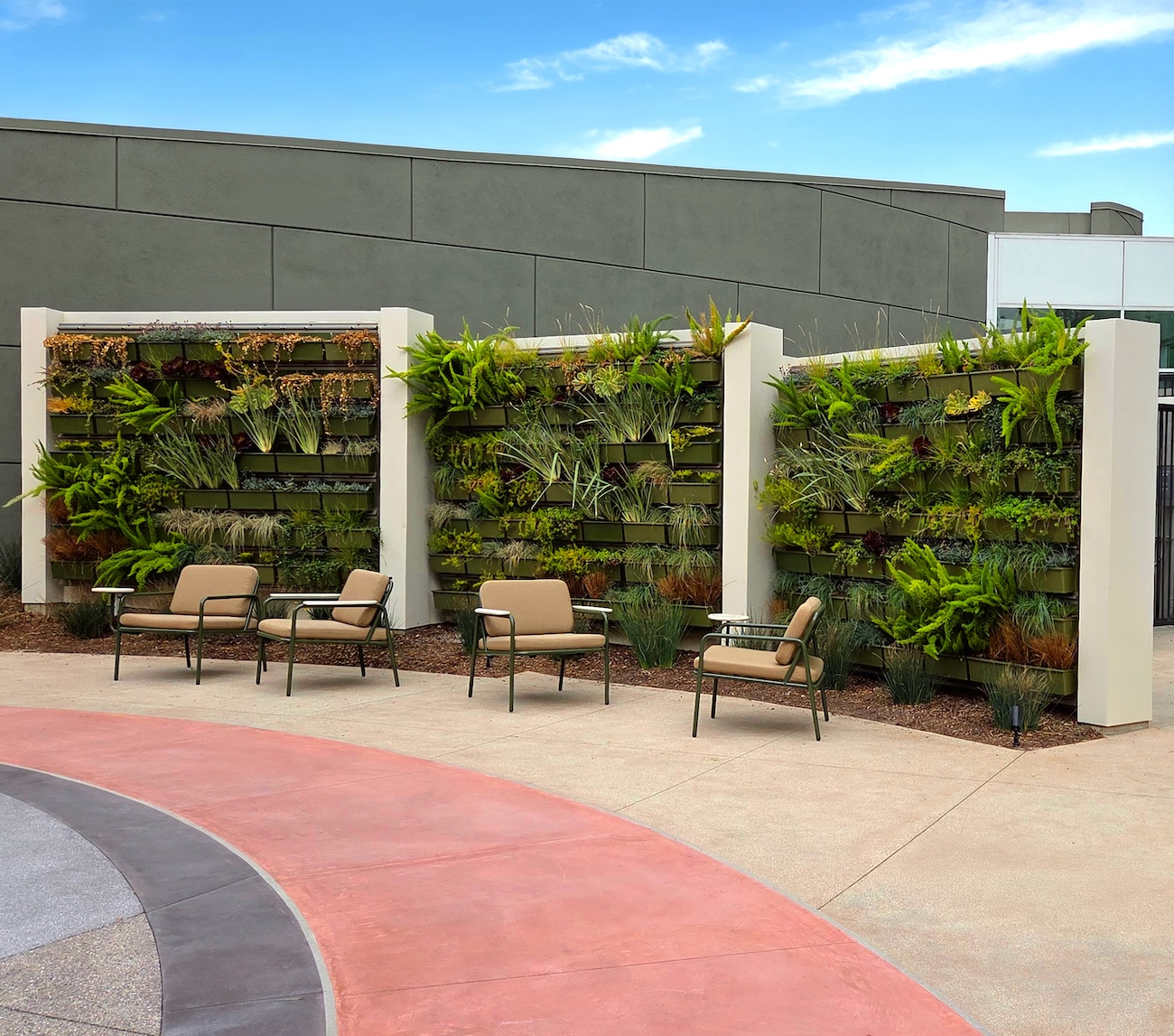
The Rob & Shari Friedman Family Living Wall. Project Design by Pica + Sullivan Architects.
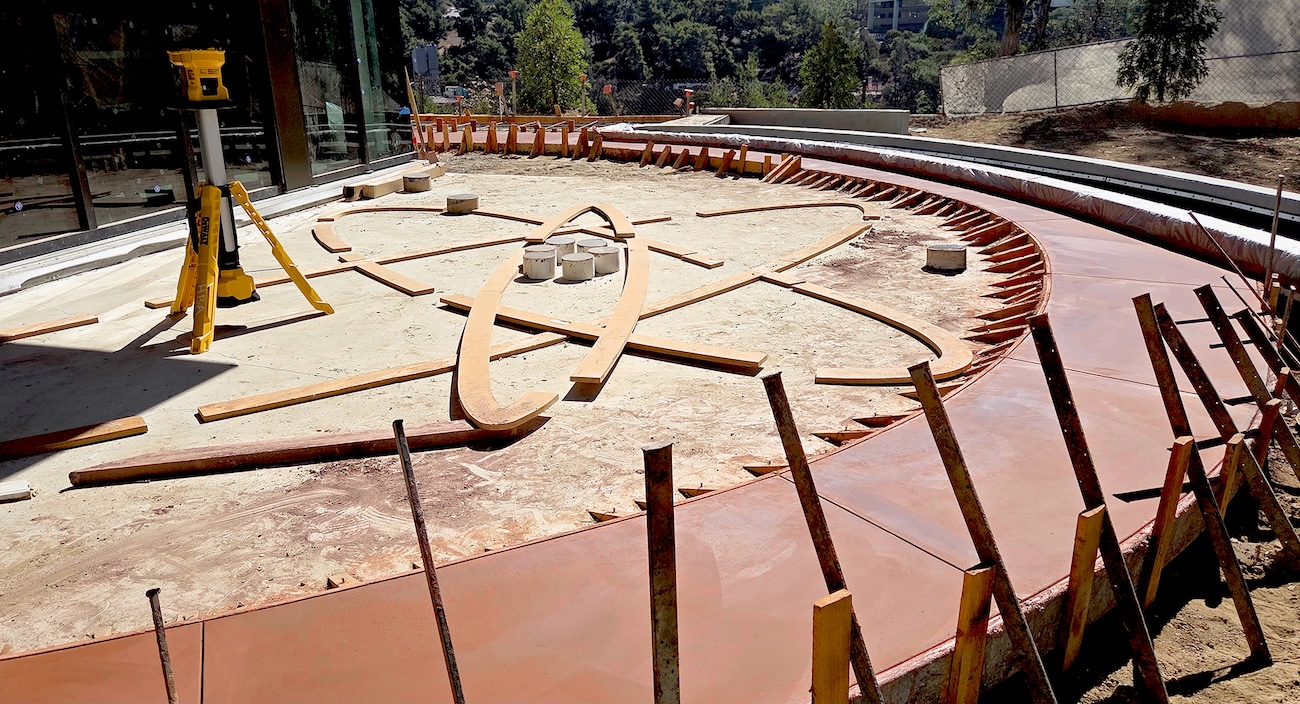
Golden Spiral ground mural at Collaboration Court. Project Design by Pica + Sullivan Architects.
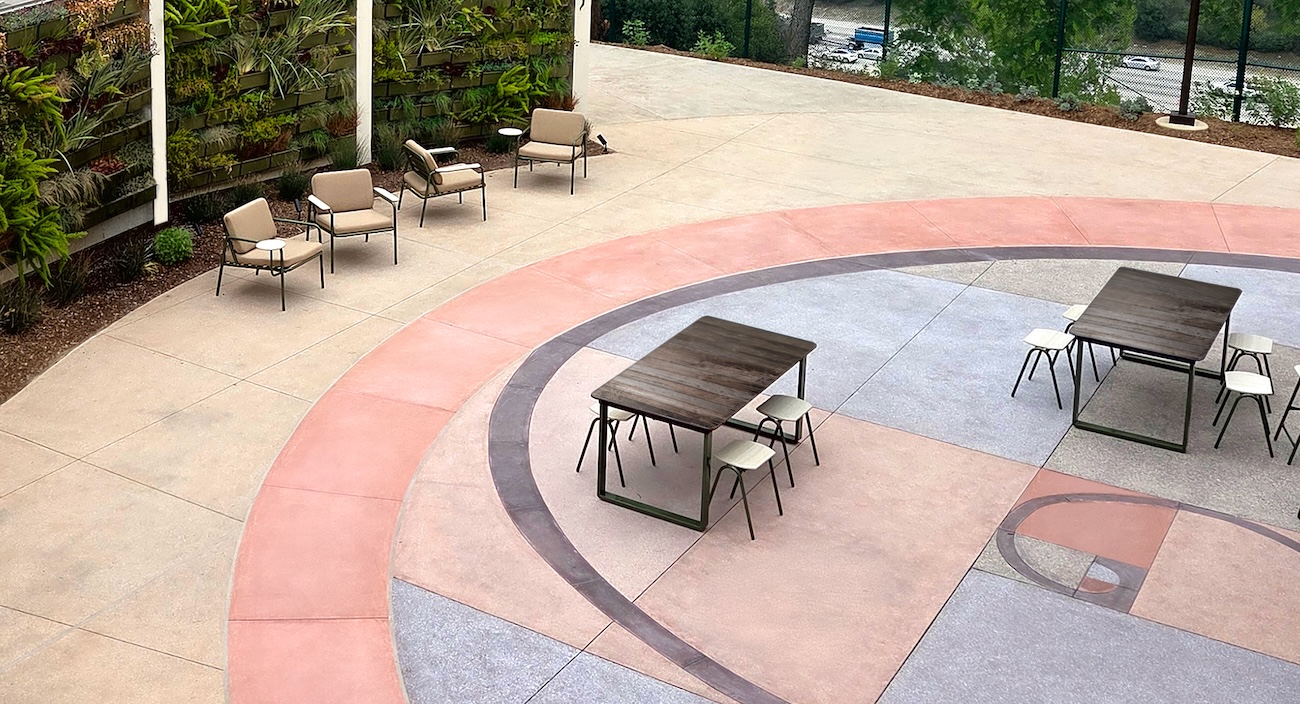
Golden Spiral ground mural at Collaboration Court. Project Design by Pica + Sullivan Architects. Landscape and Hardscape Design by Carter, Romanek Landscape Architects.
Curiosity, Experimentation, and Collaboration
Curiosity, Experimentation, and Collaboration
The Maker Space-Engineering patio features a ground mural representing a model of the Silicon Atom, rendered in colored concrete with sanblasted graphic elements.
In contrast, the patio adjoining the Robotics Lab is intentionally left open and flexible, allowing the iconography of the space to evolve over time through student projects and inventions.
The Entry Plaza serves as the front door to the Collaborative Learning and Innovation Center, creating a welcoming arrival space for students, faculty, and visitors. The generous paved area accommodates the required emergency vehicle and fire department access lane along the west side of the building, while also providing a flexible out-door gathering space that supports daily circulation and informal interaction.
Together, the building and its surrounding landscape create an integrated environment where indoor and outdoor learning are seamlessly connected. The Collaborative Learning and Innovation Center stands as a framework for the Curtis School’s educational mission - an environment where curiosity, experimentation, and collaboration shape the way young students encounter the world of ideas.
The Maker Space-Engineering patio features a ground mural representing a model of the Silicon Atom, rendered in colored concrete with sanblasted graphic elements.
In contrast, the patio adjoining the Robotics Lab is intentionally left open and flexible, allowing the iconography of the space to evolve over time through student projects and inventions.
The Entry Plaza serves as the front door to the Collaborative Learning and Innovation Center, creating a welcoming arrival space for students, faculty, and visitors. The generous paved area accommodates the required emergency vehicle and fire department access lane along the west side of the building, while also providing a flexible out-door gathering space that supports daily circulation and informal interaction.
Together, the building and its surrounding landscape create an integrated environment where indoor and outdoor learning are seamlessly connected. The Collaborative Learning and Innovation Center stands as a framework for the Curtis School’s educational mission - an environment where curiosity, experimentation, and collaboration shape the way young students encounter the world of ideas.
Pica + Sullivan Architects, Ltd.
Specializes in master planning and architectural design for nonprofit organizations, including Pre-K through 12th-grade independent and faith-based schools, religious institutions, and other mission-driven service organizations. Over the past 36 years, the Los Angeles-based firm has completed more than 1,000 projects. The firm’s approach combines hands-on principal involvement, a highly experienced and responsive staff, and a strong value-engineering sensibility that balances design goals with responsible stewardship of resources. With a contextual design philosophy and a deep understanding of the diverse stakeholders that shape nonprofit institutions, Pica + Sullivan has built long-standing relationships with clients - many of whom return for multiple projects over time.