
EducationARCHITECT
EducationARCHITECT
Volume 26 Number 7
ADDRESSING THE DESIGN NEEDS OF TODAY'S INDEPENDENT SCHOOLS
CAMPUS MASTER PLAN
CAMPUS
MASTER PLAN
If education was only about exposing students to information, it’s hard to beat what can be downloaded from the internet. Texts of every article published, virtual tours of the world’s best museums, lectures by top experts from every field – available online anytime.
But knowledge is different from information. Knowledge is the ability to actually do something: solve a problem, formulate an argument, map a process, construct a model, express an idea, resolve a conflict. Consequently, places for education need to be good places to practice the development and use of knowledge.
Existing classrooms are geared to the work of teachers – talk, write, point, question, test. But the range of student activities that contribute to effective learning are much broader than listening to the teacher or reading on one’s own. Hands-on learning, group collaboration, co-curricular activities and technology integration have taken root at all levels in the K-12 arena. These activities require learning venues that are very different from traditional classrooms.
Entire campuses, both program spaces and the spaces 'inbetween' program spaces, can be fashioned to enrich learning opportunities and profoundly impact education outcomes. To achieve this, existing school campuses need to be reimagined.
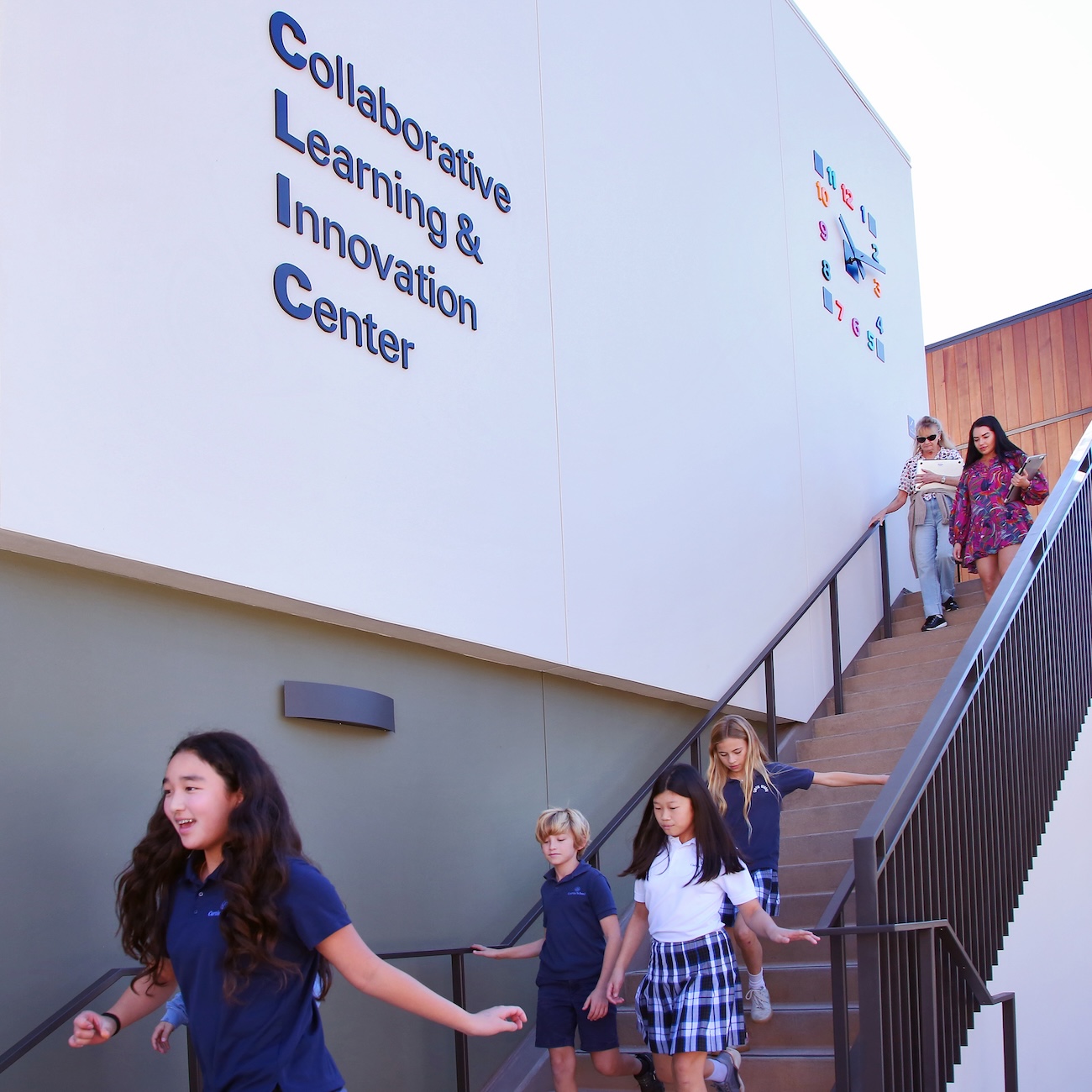
New Curtis School Collaborative Learning and Innovation Center (CLIC)
by Pica + Sullivan Architects. Photograph by Randall Michelson Photography
THE CAMPUS MASTER PLANNING PROCESS
THE CAMPUS MASTER PLANNING PROCESS
Physical plant changes can be time consuming. Decision making alone involves soliciting and sorting through a myriad of opinions, ascertaining priorities and evaluating fundraising capabilities. A Campus Master Plan is a tool that provides a framework to guide the physical development.
The goal of a master planning process is to articulate the long term strategy and define the implementation relative to function, aesthetics, budget and phasing. An appropriate Campus Master Plan illustrates the vision for the future and provides a road map to get there.
Master planning is a participatory process. A typical school has multiple constituencies - administrators, faculty, students, parents, and non-teaching staff. Each of these have a unique perspective on how the campus operates, the improvements needed and what additions or changes would be most beneficial. Progressing from “blue sky” discussions to an achievable Campus Master Plan can be a straightforward journey – as there are milestones that mark the way.
Master planning is a five stage process – Assembling Existing Condition Information, Needs Assessment, Preliminary Concepts, Master Plan Development and compilation of the Final Master Plan.
Every journey starts with a first step and in the case of a Campus Master Plan that involves taking stock of what exists. Assembling Existing Condition Information includes finding and reviewing original plans, surveys and any reports or studies. Past permits are likewise enlightening, especially as they describe previously imposed code restrictions or limitations.
This is also an excellent time to analyze the life expectancy of the existing building components. This type of study, known as a Property Condition Assessment Report, highlights financial implications associated with long term and deferred maintenance. As a rule, it is always better to be proactive than reactive!
Physical plant changes can be time consuming. Decision making alone involves soliciting and sorting through a myriad of opinions, ascertaining priorities and evaluating fundraising capabilities. A Campus Master Plan is a tool that provides a framework to guide the physical development.
The goal of a master planning process is to articulate the long term strategy and define the implementation relative to function, aesthetics, budget and phasing. An appropriate Campus Master Plan illustrates the vision for the future and provides a road map to get there.
Master planning is a participatory process. A typical school has multiple constituencies - administrators, faculty, students, parents, and non-teaching staff. Each of these have a unique perspective on how the campus operates, the improvements needed and what additions or changes would be most beneficial. Progressing from “blue sky” discussions to an achievable Campus Master Plan can be a straightforward journey – as there are milestones that mark the way.
Master planning is a five stage process – Assembling Existing Condition Information, Needs Assessment, Preliminary Concepts, Master Plan Development and compilation of the Final Master Plan.
Every journey starts with a first step and in the case of a Campus Master Plan that involves taking stock of what exists. Assembling Existing Condition Information includes finding and reviewing original plans, surveys and any reports or studies. Past permits are likewise enlightening, especially as they describe previously imposed code restrictions or limitations.
This is also an excellent time to analyze the life expectancy of the existing building components. This type of study, known as a Property Condition Assessment Report, highlights financial implications associated with long term and deferred maintenance. As a rule, it is always better to be proactive than reactive!
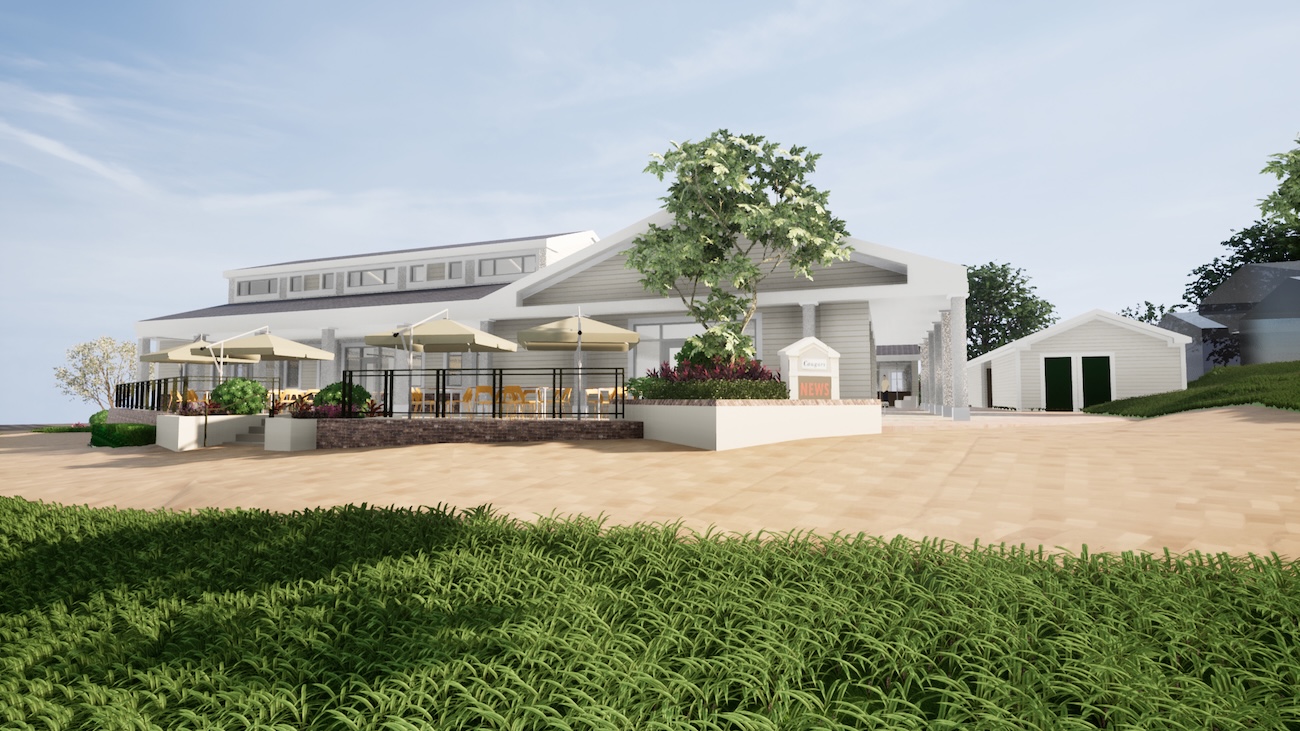
Proposed New Middle School for Clairbourn School in San Gabriel, CA. Campus Master plan and building design by Pica + Sullivan Architects, Ltd.
Profoundly Impacting Education Outcomes
Profoundly Impacting Education Outcomes
School constituencies have valuable perspectives as to what works and what should be changed. In the Needs Assessment phase, discussions in the form of design charrettes and focus groups assist in establishing the new program requirements and direction.
Collective brainstorming generates excitement and creates a groundswell of support. A broad community outreach can provide opportunities for the school Development office. Think of Needs Assessment as the “discovery” period for fundraising. Potential donors self-identify (and begin to assume leadership and ownership – both essential to the success of any project).
Presentation of a possible plan option stimulates an intense interest by the client and user groups. At the start of the Preliminary Concept phase, a proffered plan jumpstarts the discussion; prompting comments and responses. Even negative reactions, constructively presented, assist in pointing the way forward. Ultimately concept planning becomes an iterative process; exploring possibilities and options in broad strokes.
Eventually a final direction emerges. The planning becomes very detailed, to the point where strategies are developed for interim operation, staging and value engineering. Aside from actual floor plans and proposed site improvements, the overall Master Plan Development phase identifies priorities, options and architectural guidelines.
The Final Master Plan is a living document. It includes a description of the process and methodology, findings and reports, floor plans, site plan diagrams, a space program, phasing and implementation plans, and a preliminary budget estimate.
A Campus Master Plan outlines a smart growth strategy that ultimately achieves the overall vision. An effective and flexible plan anticipates new and evolving learning modalities and can accommodate changing economic conditions. It is an essential tool for creating a reimagined campus and profoundly impacting education outcomes.
School constituencies have valuable perspectives as to what works and what should be changed. In the Needs Assessment phase, discussions in the form of design charrettes and focus groups assist in establishing the new program requirements and direction.
Collective brainstorming generates excitement and creates a groundswell of support. A broad community outreach can provide opportunities for the school Development office. Think of Needs Assessment as the “discovery” period for fundraising. Potential donors self-identify (and begin to assume leadership and ownership – both essential to the success of any project).
Presentation of a possible plan option stimulates an intense interest by the client and user groups. At the start of the Preliminary Concept phase, a proffered plan jumpstarts the discussion; prompting comments and responses. Even negative reactions, constructively presented, assist in pointing the way forward. Ultimately concept planning becomes an iterative process; exploring possibilities and options in broad strokes.
Eventually a final direction emerges. The planning becomes very detailed, to the point where strategies are developed for interim operation, staging and value engineering. Aside from actual floor plans and proposed site improvements, the overall Master Plan Development phase identifies priorities, options and architectural guidelines.
The Final Master Plan is a living document. It includes a description of the process and methodology, findings and reports, floor plans, site plan diagrams, a space program, phasing and implementation plans, and a preliminary budget estimate.
A Campus Master Plan outlines a smart growth strategy that ultimately achieves the overall vision. An effective and flexible plan anticipates new and evolving learning modalities and can accommodate changing economic conditions. It is an essential tool for creating a reimagined campus and profoundly impacting education outcomes.
Pica + Sullivan Architects, Ltd.
Specialize in architectural design and planning for non-profit independent and religious-based institutions, social service organizations and charitable foundations.
We have been involved in the design of well over 1,000 projects since 1990. These range in size from master planning of entire campuses to architectural design for new buildings as well as remodels and additions.
The practice of architecture is a collective endeavor – particularly when the client has multiple constituencies with many priorities and goals. A design that serves a client appropriately is the result of collaboration to establish and refine the program and image to fit the needs and budget.