
EducationARCHITECT
EducationARCHITECT
Volume 26 Number 8
ADDRESSING THE DESIGN NEEDS OF TODAY'S INDEPENDENT SCHOOLS
Community Relations
Community Relations
In Search of Harmony
In Search of Harmony
From conception to realization, a school expansion project can be long and complex. The process typically includes assessing needs and aspirations, developing a plan, raising funds, and ultimately enduring a period of construction.
Anyone who has added onto a home or remodeled a kitchen understands the need for perseverance – and a good sense of humor. In the world of independent and faith-based schools, however, there is an additional step that can test both patience and optimism: entitlement approval.
To build new facilities or expand existing ones, schools must often obtain an “entitlement” under local zoning laws. In many jurisdictions, schools are not permitted as a matter of right and instead must seek approval through a Conditional Use Permit (CUP). While this allows a school to operate or expand within a given zone, it also imposes conditions and opens the door to public scrutiny.
The CUP process includes a public hearing – an announcement that can act as a lightning rod for neighborhood opposition. Even where neighbors were previously unorganized, a CUP application can quickly galvanize resistance. When opposition is led by determined detractors, the entitlement process can become a long, costly, and exhausting slog.
While objections vary, most neighborhood concerns ultimately come down to traffic and parking. Independent schools typically draw students from a wide geographic area, and busing is often impractical or cost-prohibitive. As a result, mornings and afternoons bring a convergence of parents, grandparents, and caregivers. Queue lines slow local traffic, limited street parking blocks driveways, and tempers flare.
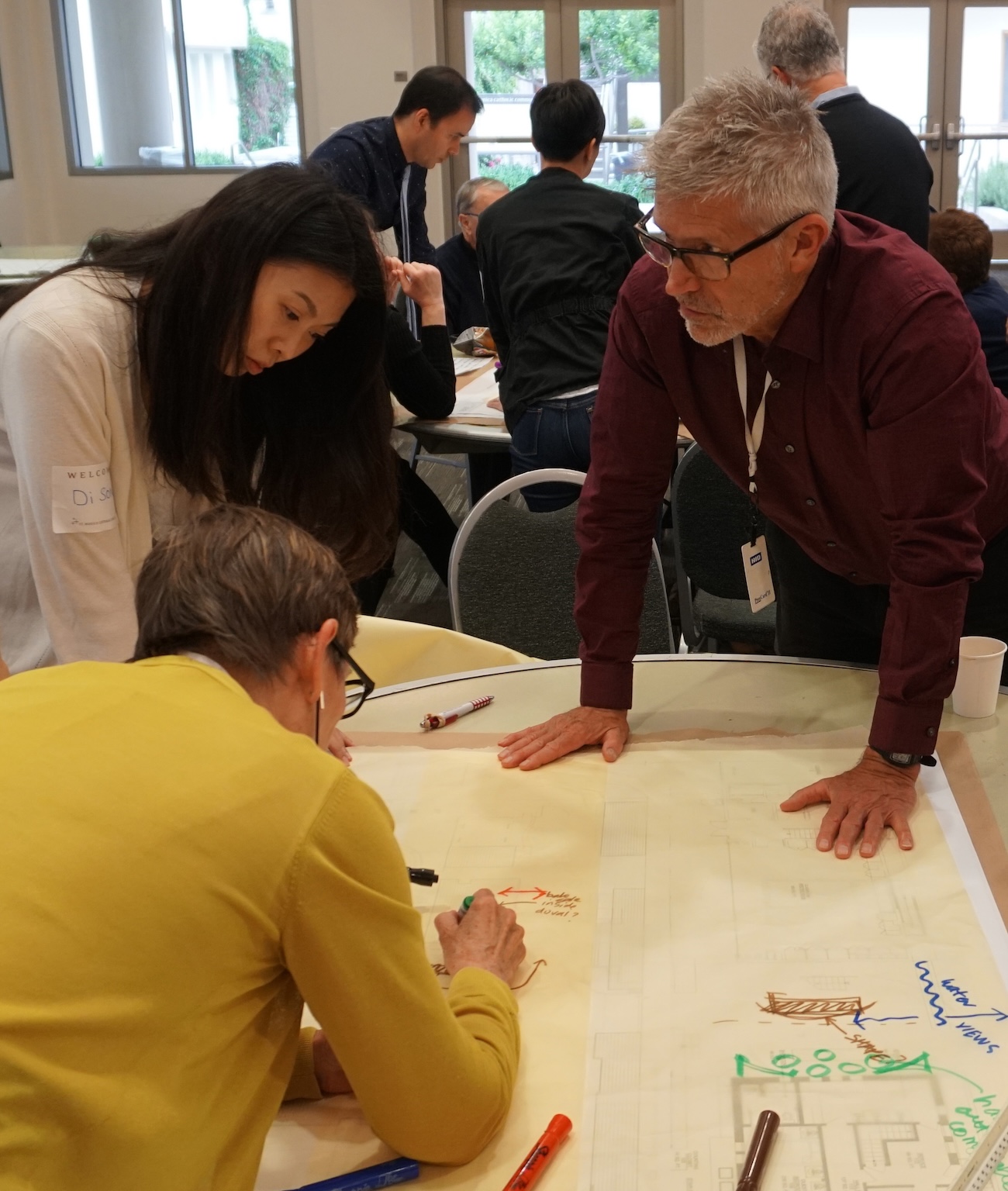
Design Charrette for St. Monica Prep in Santa Monica. The community participated in a collaborative design workshop to share concepts and ideas for the proposed Auditorium project.
At public hearings, frustrated residents often arrive in force. One by one, they approach the microphone to voice resentment over disruptions to their streets and daily routines. From their perspective, the students are “other people’s children.” That sentiment lies at the heart of the challenge. For a school to be accepted, it must be seen not as an intruder, but as an integral part of the community.
So how does a school with a broad geographic draw become a valued member of its immediate neighborhood? The answer lies in proactive engagement – well before any expansion is contemplated.
The importance of appointing a Community Relations representative cannot be overstated. The school should be visibly present at neighborhood events and actively engaged in local affairs. If the neighborhood lacks formal organization, the school can help facilitate it. It is far more productive to work with leaders chosen during calm times than with those drafted in moments of conflict.
Schools are uniquely positioned to serve as community hubs. Classrooms, multipurpose rooms, and libraries offer ideal meeting spaces. Workrooms and equipment can support neighborhood communications. When a school opens its doors in this way, it becomes the neighborhood’s home base.
Regular meetings between school leadership and neighbors are equally important. Residents want to know they are being heard. Providing direct contact information for the Community Relations representative helps address concerns before they escalate. Consistent communication
builds trust.
At public hearings, frustrated residents often arrive in force. One by one, they approach the microphone to voice resentment over disruptions to their streets and daily routines. From their perspective, the students are “other people’s children.” That sentiment lies at the heart of the challenge. For a school to be accepted, it must be seen not as an intruder, but as an integral part of the community.
So how does a school with a broad geographic draw become a valued member of its immediate neighborhood? The answer lies in proactive engagement – well before any expansion is contemplated.
The importance of appointing a Community Relations representative cannot be overstated. The school should be visibly present at neighborhood events and actively engaged in local affairs. If the neighborhood lacks formal organization, the school can help facilitate it. It is far more productive to work with leaders chosen during calm times than with those drafted in moments of conflict.
Schools are uniquely positioned to serve as community hubs. Classrooms, multipurpose rooms, and libraries offer ideal meeting spaces. Workrooms and equipment can support neighborhood communications. When a school opens its doors in this way, it becomes the neighborhood’s home base.
Regular meetings between school leadership and neighbors are equally important. Residents want to know they are being heard. Providing direct contact information for the Community Relations representative helps address concerns before they escalate. Consistent communication
builds trust.
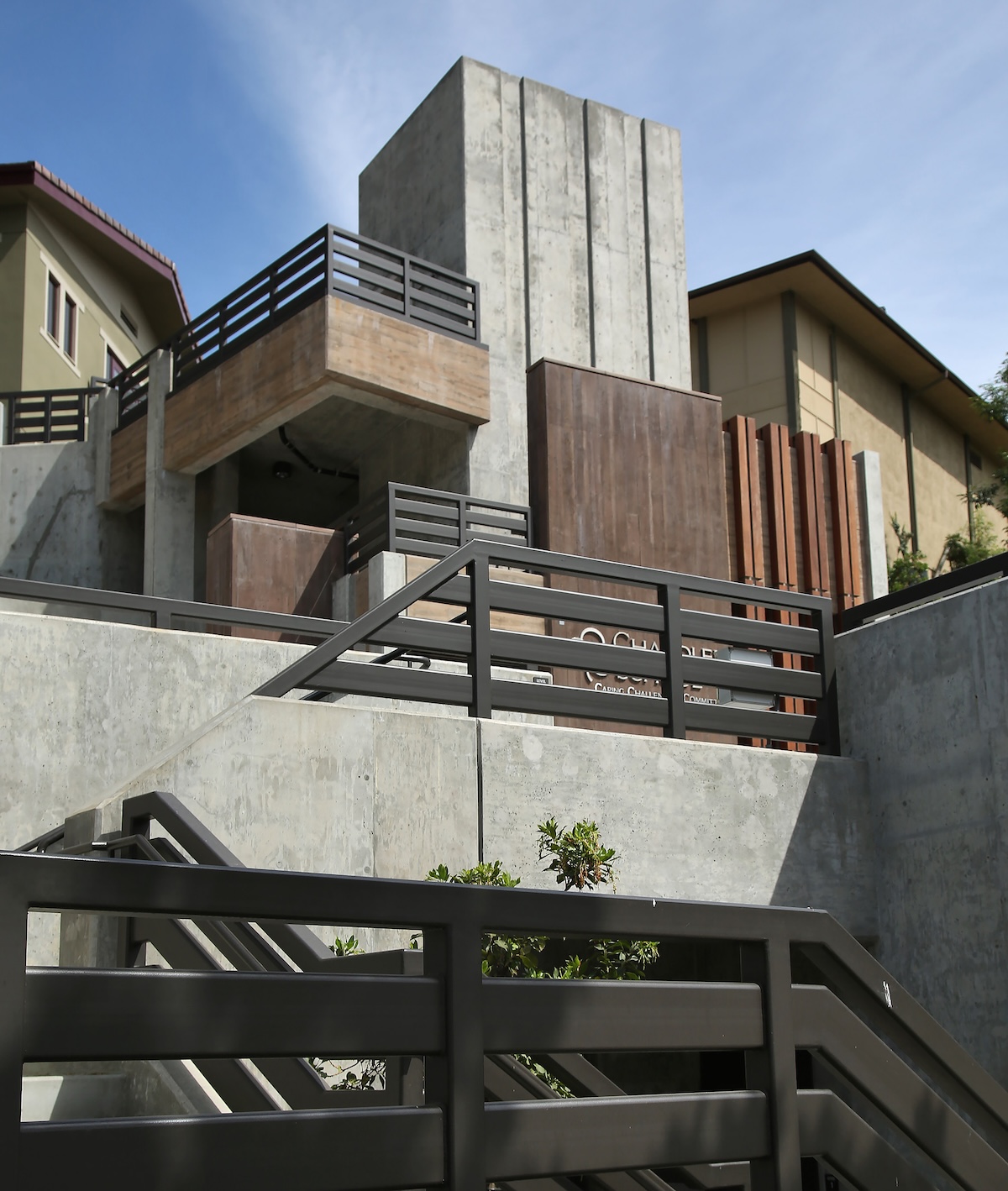
Chandler School off-street carpool queue line (on top level of parking structure). Stairs and elevator transport students to Middle School campus on hill above.
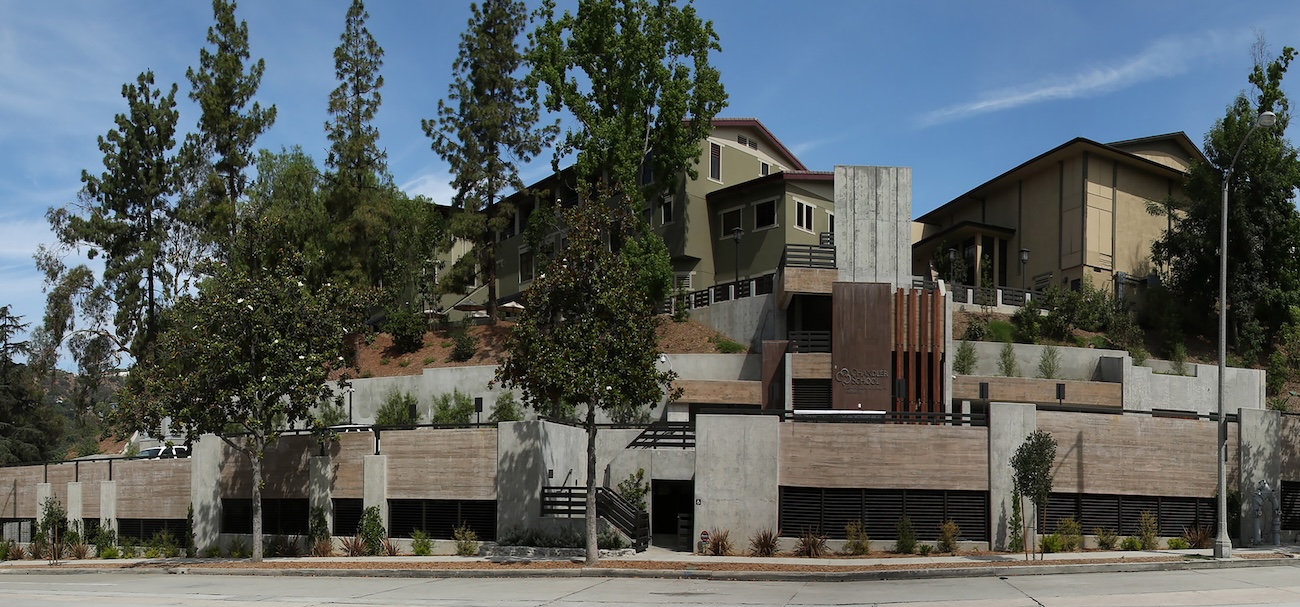
Chandler Middle School and Parking Structure designed by Pica + Sullivan Architects.
Neighbors Want To Feel They Are Being Heard
Neighbors Want To Feel They Are Being Heard
Sharing the school calendar is another simple but effective gesture. Neighbors should be informed of games, performances, and special events that may affect traffic or parking. Offering complimentary tickets is often appreciated and reinforces goodwill.
Additional outreach - such as allowing community use of athletic facilities or sponsoring youth organizations – further strengthens ties. When the school’s successes become shared achievements, pride follows. Your children become our children.
Transportation issues rarely have one-size-fits-all solutions, but common strategies can significantly reduce impacts. Carpooling should be encouraged, if not required. No vehicle should be transporting a single child. While early-morning pick-ups may be inconvenient, shared responsibility reduces overall traffic.
Schools should also discourage queuing on city streets, one of the most frequent neighborhood complaints. Afternoon congestion often exceeds on-campus capacity, especially when vehicles arrive well before dismissal. Idling cars contribute to pollution, congestion, and blocked driveways. Expanding on-site queuing or staggering dismissal times can dramatically lessen these effects.
Ultimately, schools must learn to see themselves through their neighbors’ eyes. When staff, parents, and students understand their impact on the surrounding community, meaningful change follows. Being a good neighbor means serving the best interests of all. With thoughtful planning, clear communication, and sustained effort, an independent school can be recognized not as a burden, but as a valued and desirable community asset - one that inspires shared pride.
Sharing the school calendar is another simple but effective gesture. Neighbors should be informed of games, performances, and special events that may affect traffic or parking. Offering complimentary tickets is often appreciated and reinforces goodwill.
Additional outreach - such as allowing community use of athletic facilities or sponsoring youth organizations – further strengthens ties. When the school’s successes become shared achievements, pride follows. Your children become our children.
Transportation issues rarely have one-size-fits-all solutions, but common strategies can significantly reduce impacts. Carpooling should be encouraged, if not required. No vehicle should be transporting a single child. While early-morning pick-ups may be inconvenient, shared responsibility reduces overall traffic.
Schools should also discourage queuing on city streets, one of the most frequent neighborhood complaints. Afternoon congestion often exceeds on-campus capacity, especially when vehicles arrive well before dismissal. Idling cars contribute to pollution, congestion, and blocked driveways. Expanding on-site queuing or staggering dismissal times can dramatically lessen these effects.
Ultimately, schools must learn to see themselves through their neighbors’ eyes. When staff, parents, and students understand their impact on the surrounding community, meaningful change follows. Being a good neighbor means serving the best interests of all. With thoughtful planning, clear communication, and sustained effort, an independent school can be recognized not as a burden, but as a valued and desirable community asset - one that inspires shared pride.
Pica + Sullivan Architects, Ltd.
For more than 35 years, Pica + Sullivan Architects have specialized in master planning and architectural design for non-profit Pre-K–12 independent and faith-based schools, as well as religious organizations and mission-driven non-profit service groups. During this time, we have completed over 1,000 projects throughout Southern California.
Our firm is defined by hands-on principal leadership, a highly experienced and responsive team, and a disciplined, value-driven design process that balances vision with budget.
Each project is approached contextually, resulting in architecture tailored to the unique mission, site, and community it serves.
Long-standing relationships and repeat work with our clients reflect the trust we earn – and keep - through collaboration and delivery.